
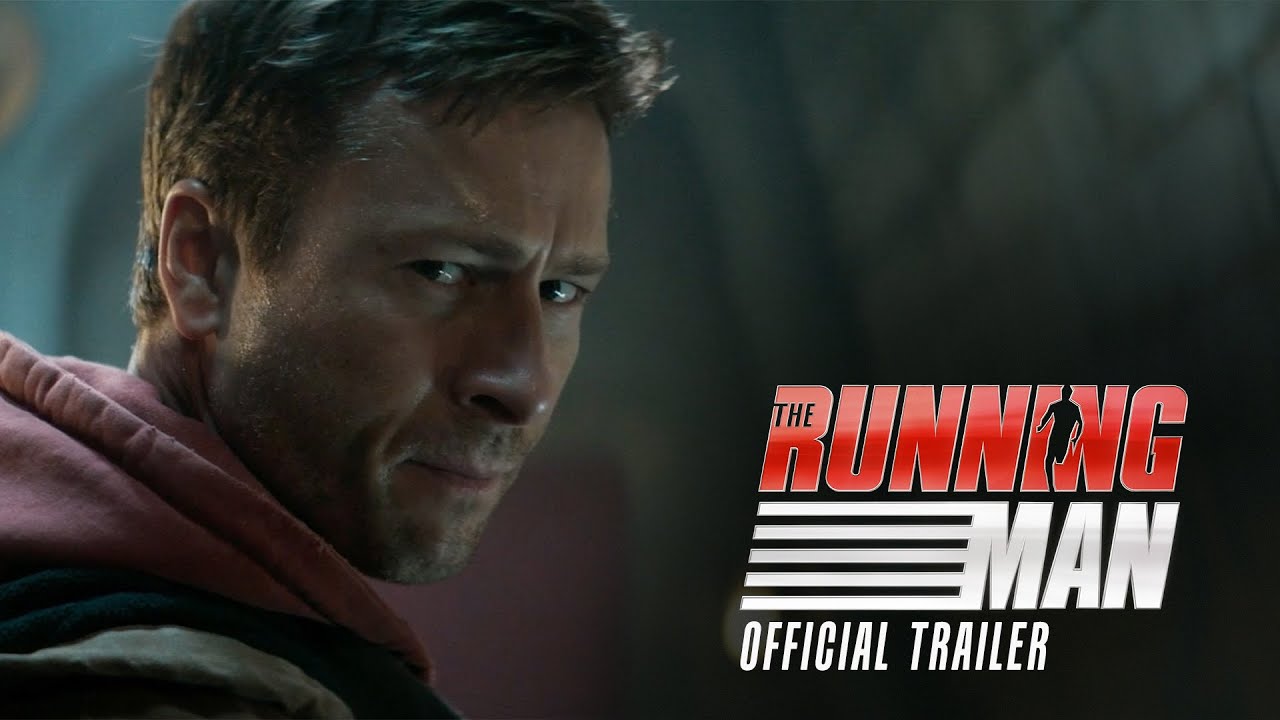
The Running Man (2025) Movie Review — Edgar Wright’s High-Octane Dystopia, TV Spectacle & Moral Reckoning
Language: English Genre: Dystopian Thriller, Action, Satire Release: , Runtime: 129 mins
- Director:Edgar Wright
- Writers: Stephen King (novel), Michael Bacall, Edgar Wright
- Cast: Glen Powell, Josh Brolin, Colman Domingo, Emilia Jones, Lee Pace
- Music: Original score (composer credit on screen)
The Running Man — Official Trailer
Tip: watch the trailer above for Edgar Wright’s tone — kinetic editing, pop-sensible production design and the film’s satirical edge.
Story & Summary
The Running Man reimagines Stephen King’s 1982 dystopian fable for 2025 through the exacting lens of Edgar Wright. Glen Powell plays Ben Richards, a man who enters a government-sanctioned game show — one in which contestants, known as Runners, can go anywhere in the world but must survive for thirty days while being hunted by professional "hunters" hired to kill them. The show is equal parts sport, spectacle and propaganda; Richards becomes an accidental lightning rod when his humanity and resistance meet a crowd hungry for spectacle. What follows is a lean, muscular thriller that interrogates media violence, performative empathy and the mechanisms that turn citizens into content.
Wright’s screenplay — adapted in collaboration with Michael Bacall and drawing from King’s original text — gently modifies the source material to speak to a 21st-century media ecology: social platforms, influencer circuits and a surveillance apparatus that is equal parts algorithm and appetite. The central tension is simple and savage: how much will society sacrifice in the name of entertainment, and what does it mean when resistance becomes content?
Detailed Review & Analysis
This longform review — written for readers searching "The Running Man review", "Edgar Wright Running Man review", "Glen Powell Ben Richards" or "Stephen King adaptation 2025" — unpacks story mechanics, performances, direction, production design, music and cultural stakes. Over the next few thousand words we’ll examine how Wright balances kinetic spectacle with moral interrogation, and why this adaptation works in parts and falters in others.
Introduction & Context — Why This Adaptation Matters
Stephen King’s The Running Man is among the author’s most cynical short novels: a critique of mass entertainment’s appetite for sanctioned violence and the political systems that monetize it. The 1987 film starring Arnold Schwarzenegger turned King’s allegory into broad action; Wright’s 2025 take attempts to return the story to its satirical core while layering in contemporary anxieties about social media, virality and the commodification of outrage.
That Wright, a director known for precise genre moves and an audacious sense of rhythm (see Shaun of the Dead, Hot Fuzz, Baby Driver), would tackle King’s bleak story is itself interesting. Where the original is raw and pulpy, Wright’s film is stylized — a perfect container for satire. This is not a nostalgia exercise; it is an attempt to translate the novel’s moral center into a media landscape where livestreams, micro-celebrities and algorithmic boosts can make or break an insurgent moment.
Plot & Screenplay — (Spoiler-Free)
The screenplay starts small: Ben Richards is an ordinary man with a financially precarious life and a personal stake that drives him to take risks. When he signs up for the titular program (a desperate, ill-advised attempt to secure safety or a future for someone he loves), he becomes the subject of a spectacle engineered to please viewers and pacify a restless public.
The film’s first act focuses on setting the rules: what the game allows, how the hunters are contracted, and how the show’s producers manipulate public sentiment. The middle act accelerates into a hunt — a game of geography, improvisation and moral choice. The climax interrogates the boundary between rebellion and performance; Wright stages it less as a violent set-piece and more as a media event, a sequence about optics, montage and the currency of attention.
Wright and Bacall’s screenplay tries to maintain King’s bleakness while introducing characters who feel of our moment — influencers who fetishize danger, bureaucrats who treat human stakes like metrics, and ordinary viewers who alternate between compassion and callousness depending on their device’s feed. The result: a script that often lands its satirical jabs but occasionally struggles to reconcile spectacle with seriousness.
Direction by Edgar Wright — Vision & Tone
Edgar Wright retools his trademark stylistic grammar for a story that demands urgency. His direction is at once meticulous and propulsive: rapid cuts that don’t confuse, montages that clarify power relationships, and long takes that breathe when the film needs moral weight. Wright’s sense of rhythm — his ability to choreograph action, performance and sound — is the film’s beating heart.
But Wright is working in a different register than his past comedies; this is not sardonic rom-com territory. Here he applies his editorial discipline to interrogate spectacle. There are moments where his formal choices — an on-screen interface overlay, split-screen social metrics, and diegetic advertising — hit with unnerving accuracy. Yet at times the film’s slickness can feel like a layer too many: the satire risks becoming part of the show it means to condemn. That paradox is central to the film’s mixed success.
Characters & Performances — Glen Powell & Supporting Cast
Glen Powell anchors the movie with a performance that walks the line between charisma and strain. Powell’s Ben Richards is less the muscle-bound action hero of the 1987 screen version and more an everyman with a pragmatic stubbornness. Powell imbues Richards with a wry tolerance and a visible fear; it is a small, humane performance that keeps the film tethered when the set pieces threaten to overwhelm.
The supporting cast is stacked. Colman Domingo brings depth as a sympathetic insider who’s complicated by ambition; Josh Brolin plays the showrunner archetype with equal parts oily charm and bureaucratic menace; Emilia Jones provides nimble emotional clarity in her scenes; and Lee Pace — when used well — cuts a cool, almost aristocratic figure who represents the industry’s complacent gatekeepers. Each actor brings a distinct energy, and the ensemble helps the film feel lived-in even when the world is exaggerated for effect.
Score & Sound Design — Rhythm As Rhetoric
Sound design is one of the film’s smartest tools. Wright uses a pulsing score — part synth, part percussion — to mimic how modern media operates: an incessant background hum that drives attention and anxiety. The soundtrack intercuts pop moments with atmospheric drones; music cues signal editorial turns, and the film uses diegetic sound (audience roars, ad jingles, notification pings) to keep the viewer aware that they’re watching a constructed experience.
The production opts for a score that complements rather than manipulates. When the film slows, so does the music; in the hunt sequences, the audio collage becomes almost unbearably dense in a way that mirrors Richard’s mental compression. This is not background wallpaper — it’s active, and often brilliant.
Visuals & Cinematography — TV Spectacle, Cinematic Scale
The cinematography alternates between glossy broadcast aesthetics and a grittier, handheld immediacy. The show’s televised segments are shot with hyper-saturated, almost neon primetime colours; the off-camera moments adopt a narrower palette, closer to reality. This visual grammar is a smart choice: it externalizes the film’s argument about how media dresses and distances human life.
Production design deserves mention: the show’s set pieces — public stadiums rigged with traps, subterranean command centers, ad-studded cityscapes — feel plausibly built for spectacle. Costume design plays with brand-heavy outfits for contestants and glossy uniforms for hunters, while the film’s worldbuilding includes in-story merchandise, tie-ins and the surreal ubiquity of corporate sponsorship. These details make the fictional world feel convincing and chilling.
Production Design & Stunts — Choreography of Pursuit
The film is at its best when it commits to the reality of pursuit. Stunts are practical where they can be and cleverly augmented where they cannot be; this mix keeps the chase sequences visceral without tipping into cartoonishness. The hunters are choreographed as a unit — each with a signature approach — and the hunt scenes often function like extended set pieces with rhythm and logic rather than random violence.
Themes — Media, Spectacle & the Ethics of Viewing
The film’s central argument is microscopic and far-reaching at once: it asks how audiences are complicit in the spectacle and what moral obligations arise when human suffering becomes entertainment. Wright and his co-writers extend King’s critique to include algorithmic optimization: when engagement is monetized, outrage becomes a product and empathy can be gamified.
The Running Man also probes identity and agency. Ben Richards is both subject and producer of his own narrative — every choice he makes is refracted through screens, commentators and share counts. The film insists we ask whether resistance that is visible can be real, or whether visibility inevitably co-opts dissent.
Pacing — Rhythm & Momentum
Wright’s editing is the engine that keeps the film moving. Though the movie occasionally lingers (a necessary choice when allowing moral questions to land), it rarely stalls. The second act is dense with set-piece escalation — evidence of a director comfortable with kinetic storytelling — while the final act prefers a more meditative, reputational reckoning. The tonal switch will frustrate audiences expecting relentless action; but for viewers invested in the film’s arguments, the slower moments are where the movie earns resonance.
What Works
- Timely satirical premise that interrogates modern spectacle.
- Glen Powell’s restrained, humane lead performance.
- Edgar Wright’s razor-sharp editorial voice and visual grammar.
- Production design that convincingly renders televised hellscapes.
- Sound design and score that function as narrative commentary.
What Could Be Better
- Occasional tonal mismatch: slick satire vs earnest human drama.
- Some secondary characters are sketched thinly in service of ideas.
- The movie sometimes flirts with self-awareness in ways that blunt its critique.
Deep Dive: Key Scenes & Analysis — (Mild Spoilers)
A standout sequence occurs roughly midway through the film: Richards takes refuge in an abandoned broadcast hub where he watches archived feeds of past seasons. The montage — cutting between home viewers’ reactions, host monologues and Richards’ face — crystallizes the film’s thesis: spectacle is a social technology that rewires empathy. Wright stages the scene with documentary restraint; the emotional truth of Richards’ exhaustion is mirrored by banal metrics scrolling on-screen.
Another effective scene involves a confrontation between Richards and a celebrity hunter who wears performative remorse as a brand. The hunter’s PR machine spins damage control even as the man puts a bullet through a wall; the sequence is both grotesque and tragic, revealing how the culture of apology functions as a buffer for structural violence. It’s a sequence that lands because the film resists caricature — the hunter isn’t purely monstrous, but morally compromised in ways that feel eerily contemporary.
Verdict
The Running Man is an often-brilliant, sometimes-fractured meditation on spectacle and human worth. It benefits immensely from Edgar Wright’s formal daring and Glen Powell’s empathetic lead turn, and it includes production and design work that make its satirical world convincingly awful. At its best the film teaches us to look at our feeds with a skeptical, humane eye; at its worst it occasionally indulges in the very polish it critiques.
⭐ Final Rating (editorial): 3.9 / 5
Recommendation: Watch in theatres for the full sensory editing and sound design; this is a film that rewards attention and post-screening conversation.
Extended Essay — Comparisons, Cultural Impact & Final Thoughts
Comparing Wright’s film with the 1987 adaptation and Stephen King’s original text reveals why adaptations are interpretive acts. The 1987 film, starring Arnold Schwarzenegger, simplified King’s bleak satire into an action vehicle. Wright’s adaptation, by contrast, attempts to pull King’s ethics into the present and expand the critique to include social media’s amplifying power. That choice is meaningful: while the Schwarzenegger-era film delivered spectacle, Wright’s film wants to make you complicit. It insists viewers examine their own participation in spectacle.
The film’s cultural impact will likely be measured in two registers: critics who interrogate its ethical balance and audiences who take away a visceral sense of the mechanics of media. Initial reactions suggest a split — some celebrate Wright’s ambition and Powell’s performance, while others critique the film for being too mannered or uneven in tone. This divergence is telling: the film is not trying to placate. It is provocative in a way that will spark debate.
There are real questions at stake: does visibility equal influence? Can a televised act of resistance be authentic if it is designed to be watched? The Running Man gives no easy answers, and perhaps that is the point. Wright’s film is most important when it pushes audiences to ask uncomfortable questions about the media they consume.
Practically speaking, the film succeeds as a piece of filmmaking: the editing is sharp, the performances are committed and the production design is vivid. Its failures are mostly tonal — moments when satirical polish undercuts emotional grit. But on balance, the film’s strengths outweigh its shortcomings. It’s one of those movies that will be argued about, and in our present moment that is a kind of triumph.
Public Rating
Rate this movie (1–5 stars). Your vote is saved locally in your browser; the average and vote count shown are based on local votes stored here.
Average Rating: 0 (0 votes)
Note: This public rating system stores votes in your browser using localStorage. It is a simple, privacy-friendly demo and not a global tally.
Where to Watch
The Running Man opened in theatres on Nov 14, 2025. Check official distributor announcements and the film’s pages on streaming platforms for availability; early windows suggest a digital rental/purchase release a few weeks after theatrical run and possible streaming on major platforms later. For updates and related reviews, see our Reviews and Hollywood sections on Blockbuster Movie Buzz.
The Running Man — संक्षिप्त हिंदी सारांश
The Running Man (2025) एडगर राइट द्वारा निर्देशित एक ताज़ा और समयोचित फिल्म है जो प्रसिद्ध उपन्यासकार Stephen King के मूल विचारों पर आधारित है। फिल्म की कहानी एक ऐसे खेल शो के इर्द-गिर्द घूमती है जहाँ प्रतियोगियों को दुनिया में कहीं भी जाने की छूट है, पर वे ‘‘हंटर'' नामक पेशेवर शिकारीयों से बचे रहकर तीस दिन तक जीवित रहना चाहिए। Glen Powell का किरदार Ben Richards एक साधारण आदमी है जो किसी व्यक्तिगत कारण से इस खेल में हिस्सा लेता है — और जल्द ही वह उस सिस्टम के खिलाफ़ मॉरल और पब्लिक बहस का केंद्र बन जाता है।
एडगर राइट का दृष्टिकोण फिल्म को तेज़, स्टाइलिश और विचारोत्तेजक बनाता है। उनकी फिल्म-निर्देशन भाषा — तेज़ कट्स, सटीक मोंटाज, और साउन्ड डिजाइन — दर्शक को उस मीडिया-स्पेक्ट्रम के अंदर ले जाती है जहाँ संवेदना, मुट्ठी भर इंटरनेट ट्रेंड्स और विज्ञापन की ताक़त मिलकर इंसानियत को कंटेंट में बदल देती हैं। फिल्म दर्शाती है कि कैसे दर्शक भी अक्सर बिना जाने-सुने मनोरंजन की भागीदारी बन जाते हैं और कैसे सिस्टम उनकी प्रतिक्रियाओं को पैमाना बनाकर आगे बढ़ता है।
प्रदर्शन के मामले में Glen Powell ने एक संवेदनशील और धरातलीय भूमिका निभाई है; वह एक ऐसे नायक को जीवंत करते हैं जो हीरो नहीं पर एक इंसान है — भय, दया और जुझारूपन से भरा हुआ। सह-कलाकारों में Colman Domingo और Josh Brolin जैसे नाम हैं जो फिल्म के अलग-अलग सामाजिक और औद्योगिक पहलुओं को मजबूती से प्रस्तुत करते हैं।
यदि आप तेज़-तर्रार एक्शन फिल्मों के साथ-साथ उन फिल्मों में रुचि रखते हैं जो सोशल मीडिया, असली समय के दर्शक और नैतिक जाँच—परख को दिखाती हैं, तो यह फ़िल्म आपके लिए है। दोनों—मनोरंजन और विचार—का यह संयोजन फिल्म को बहस के काबिल बनाता है। थिएटर में देखें ताकि एडगर राइट की ध्वनि और संपादन का पूरा प्रभाव महसूस हो।

No comments:
Post a Comment